Generic interview advice is worth roughly nothing, because the interview is not generic. They have your resume in front of them, they have a posting they wrote, and the questions come out of the gap between those two documents.
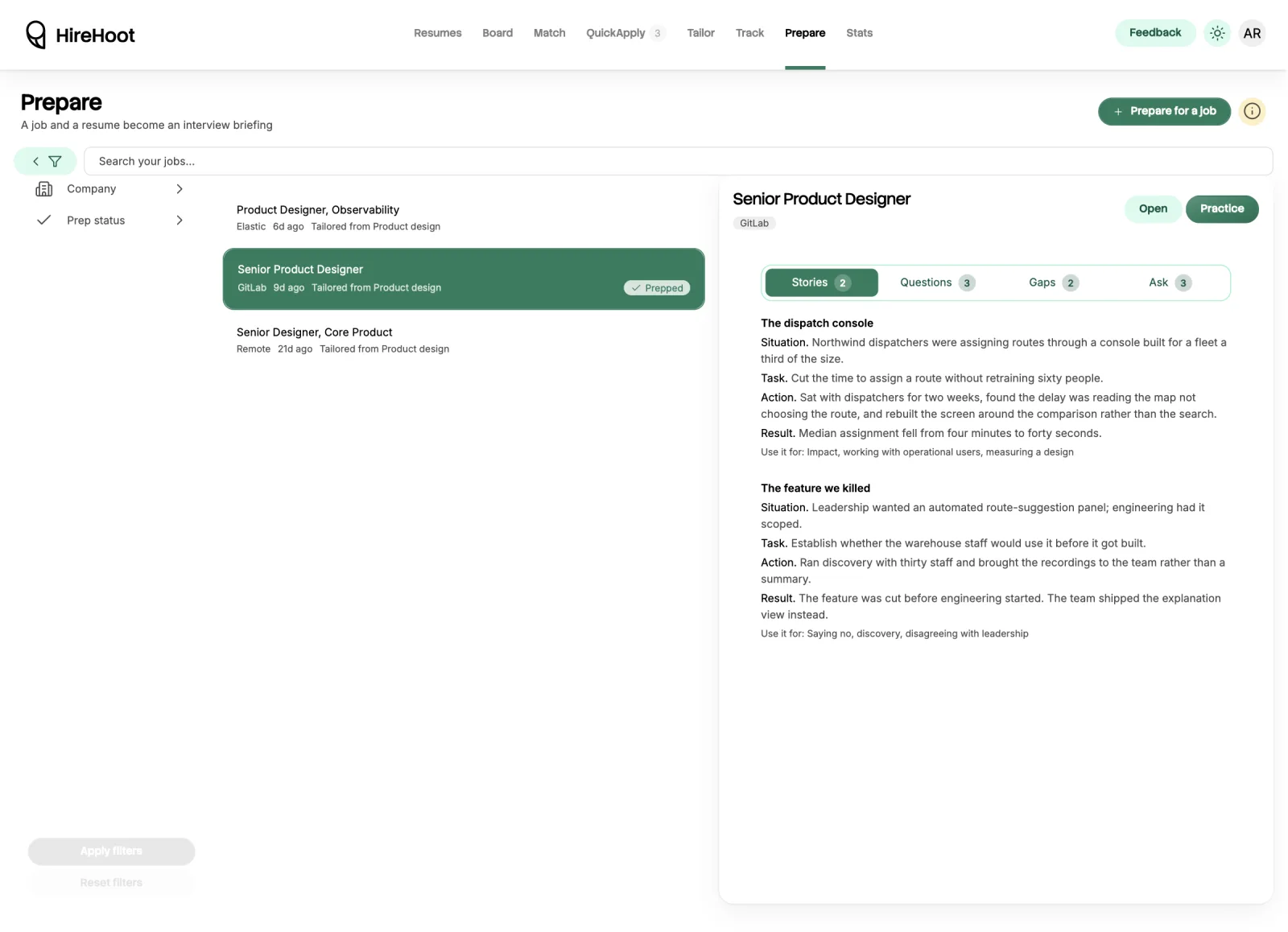
Prepare reads both. Point it at a job, pick which of your resumes you will be answering for, and the briefing is about the document the interviewer is actually holding. If you tailored one for that job, use it. If you did not, any resume in your library works, and pairing it with the job costs nothing.
You get the questions the posting invites, the strongest material in your history for each one, the places where your resume is thin against the role, and things worth asking back.
No tailoring required
Any resume in your library will do. Pairing it with a job is free.
Names your weak points
The gaps between your resume and the posting, before someone else finds them.
One job, not a checklist
A briefing for this interview, not a page of generic advice.
One credit per briefing. Re-reading a briefing you have already generated is free. Practising against it is billed separately, one credit per session.
Full documentation, including the limits