Match
Openings scored against your actual resume, one at a time
What it does
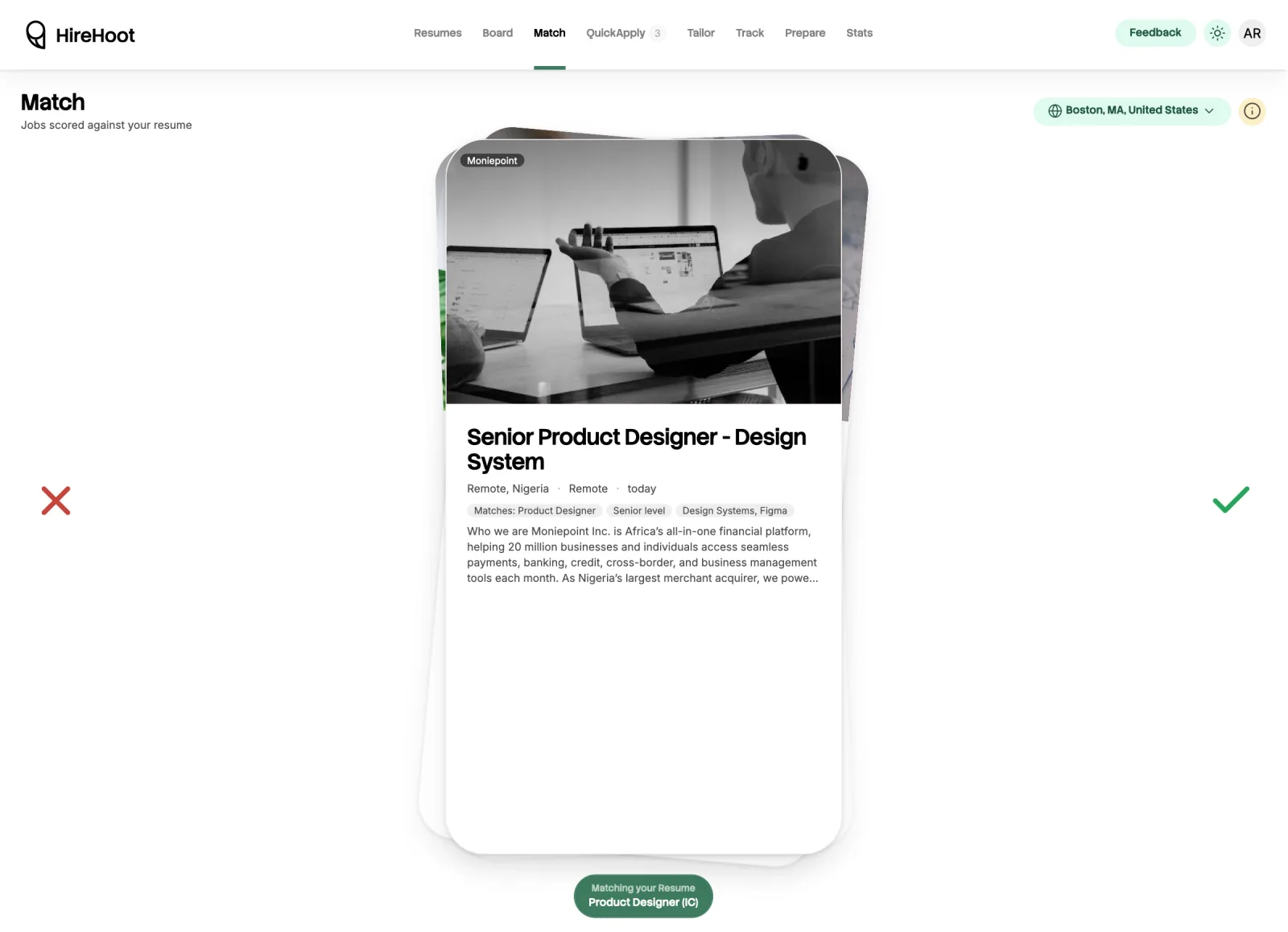
Match scores open roles against one of your resumes and presents them one at a time for a keep or bin decision.
It uses the resume you choose, so a resume aimed at a different direction produces a different queue.
When to use it
- You have a resume built and want a shortlist rather than a search results page.
- You are opening the site daily and want to work through what is new without repeating a search.
How to use it
-
Pick a resume
Match needs to know what to score against. The button under the deck names the resume in use; pressing it shows your resumes as previews so you can pick by sight, not just by title.
-
Review the role
Each card shows the title, company, location, and the score against the resume you picked, along with the description.
-
Keep or bin
Keep files the role in Track and keeps it available for tailoring. Bin removes it from your queue permanently.
-
Tailor the keepers
From a kept role, send it to Tailor and the description is already loaded.
What it costs
Free. Scoring and swiping cost nothing. Only tailoring a resume against a role you kept spends a credit, and your first tailored resume is free.
How credits workGood to know
Binning is permanent
A binned role does not come back into your queue. It is still findable on the board by searching for it.
A score is a ranking aid, not a verdict
It tells you where to spend your time first. A lower-scored role you actually want is still worth applying to, and a high score is not a prediction that you will hear back.
Weak matches are hidden, not padded
A role that only shares a broad field with your resume is left out rather than shown to fill the deck, so a short deck means the board genuinely has little for you today. Widening the location usually brings back more.
It needs a resume with substance
A near-empty resume gives the scorer nothing to reason about, and the ranking will be close to arbitrary until you fill it in.